
Memoir Exposes Enmeshed Parent-Boy or girl Boundaries
[ad_1]
Duygu Balan
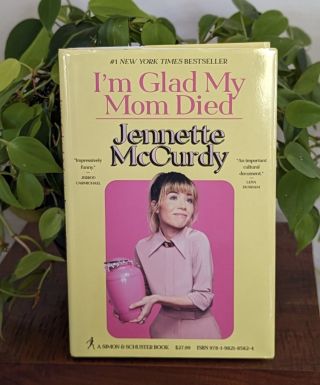
I’m Glad My Mother Died is an insightful portrait by the previous Nickelodeon boy or girl star Jennette McCurdy, uncovering the fact of how childhood abuse and enmeshed father or mother-youngster boundaries can be mistaken for really like.
The provocative title not only permits Jennette the practical experience of staying eventually witnessed in her agony but also is a supply of hope and inspiration for other kid abuse survivors and a declaration that therapeutic is achievable.
As a therapist who mostly performs with familial trauma and attachment injuries, I have advised this guide to several of my shoppers and witnessed them sensation encouraged and motivated by the author’s therapeutic journey.
In this poignant memoir, Jennette usually refers to experience empty inside of. Clinically, the realization that one’s mum or dad is abusive, negligent, or unequipped will cause so a great deal anxiety and ache that numbing one’s inner thoughts may turn out to be vital to survival.
Mainly because abusive homes are typically run with the dictate, what takes place in the household stays in the family members, and traumatic experiences are sealed with silence. For this explanation, quite a few childhood abuse survivors adopt the untrue perception that they are the only ones who come from dysfunctional, negligent, or abusive residences.
Survivors frequently report sensation as if they spoke up, no a person would believe that them, and they would be turned down or perceived as broken. This qualified prospects to more silence, hence pushing trauma survivors into abandonment. Isolation improves the hazard of self-damaging coping mechanisms and heightens the inclination to repeat harmful romantic relationship patterns. It also can make it much less possible for survivors to request for assist from their loved types, attain out to their communities, or search for scientific companies.
A single of the factors why memoirs such as this one particular are so effective and vital is that they deliver recognition to issues that so lots of endure in non-public. Prevention gets achievable by shedding light on domestic violence, parental abuse, and familial trauma. When these difficulties are remaining in the dark, it results in a toxic fertile ground where by trauma is cultivated and passed on from technology to era.
In our culture, we are inspired to enjoy our mothers and fathers, stay faithful to our families, and be grateful for the sacrifices they make for us. Estrangement from relatives members, implementing clear, stringent boundaries, or cutting ties is frowned upon even if these relationships were being negligent or abusive.
Most of the e book is of Jennette processing her advanced emotions towards her mother Debra, who pushed her to turn out to be an actor at the age of 6, handed down her disordered having by instructing her how to restrict her energy at the age of 11, and was emotionally, verbally, and sexually abusive.
Like a lot of who grew up in abusive properties, Jennette’s survival depended on her mother’s adore and acceptance. Jennette’s mother vicariously lived through Jennette and noticed her stardom as a signifies of deliverance from her lifestyle. She describes an enmeshed dad or mum-kid partnership where her mom prevented Jennette from emotional and bodily autonomy.
An enmeshed dad or mum-baby marriage is when the youngster is in tune with the parent’s psychological and bodily demands to the stage wherever they really do not master to build a feeling of their requirements. The youngster has no emotional or physical independence, and their self-well worth and identification kind about assembly their parent’s desires. The kid relies upon on the father or mother so much that even the assumed of being with no them generates extreme panic and emotional dysregulation.
In her guide, Jennette talks about not only being liable for her mother’s emotional very well-getting but also carrying the burden of her family’s economical steadiness. She describes that as a youngster, she hated performing but normally felt like she would let her relatives down if she stopped. There is an anecdote in the reserve where by Jennette tells her mother that she wants to give up performing, and her mom bursts into tears.
Boundaries Necessary Reads
Studying Jennette’s account of her romantic relationship with her mother, it felt unclear exactly where Debra finished and Jennette started out. Escalating up, Jennette did not really feel she had the right to say no to her mother and was not allowed bodily or emotional autonomy.
The ebook discusses how Jennette’s modifying human body prompted her mother strain and agony. Growing up, Jennette felt as however she was abandoning her mother. Her mom’s rejection of Jennette’s growth led to Jennette’s unhealthy marriage with her physique.
During the memoir, Jennette describes becoming accountable for her mother’s joy and continuously attempting to be in tune with her desires. She states that she felt anxious and concerned about her mother’s properly-being from a youthful age.
The fragility of her life was the middle of mine.
In enmeshed interactions, moms and dads are inclined to address their kids as peers and confide in them about grownup issues that are not developmentally ideal. Jennette talks about how her mother would complain about her sad relationship and typically talk ill of her father.
Poor boundaries and the incapacity of the dad and mom to control and filter their feelings can direct to significant emotional abuse. Jennette describes her mom as risky and unpredictable, switching from becoming particularly protective to particularly attacking. This led to Jennette resenting and being enraged by her mom, which triggered her to really feel rigorous guilt, ensuing in extra discomfort.
There is even an occasion in the guide in which Debra tells Jennette that her most cancers returned simply because of Jennette. Even as an grownup, these accusations are internalized by the baby, foremost to significant guilt and shame and making the little one a lot more inclined to manipulation, leading to them to disregard their autonomy, wants, and wishes.
The dichotomy of Jennette’s account of her mother is intriguing. Through the memoir, Jennette’s voice adjustments from heartbroken to resentful to outright angry, but amongst the lines, her compassion and admiration for her mother occur as a result of. Kids normally idolize their abusers since their survival is dependent on them. In 1 of her interviews, Jennette suggests, “I do not know who I am without having her since I was living for her, and now, she’s lifeless.”
Jennette touches on her therapeutic journey and describes that when her 1st therapist referred her mother as “abusive,” she experienced a intense response and dropped out of remedy. For Jennette, accepting that her mom was abusive meant reframing her complete existence and identity, which in the beginning brought about her turmoil and fear.
This is a quite typical reaction to painful realizations throughout the therapeutic course of action. Considering the fact that small children depend on their mothers and fathers for survival, when parents are abusive or neglectful, they have to establish narratives that normalize these behaviors. It’s widespread for survivors to adopt beliefs such as: “I was a difficult little one” or “My mom worked two work opportunities to help us. Of course, she had a small fuse.”
As consciousness raises through remedy, the narratives vital to survival are suddenly shattered. This can lead to extreme soreness, nervousness, and a experience of remaining misplaced. Customers might reject these new perspectives, feel threatened by the reframes, turn out to be defensive, or fall out of remedy entirely.
For this purpose, it is critical to speed the therapeutic journey according to the client and respect the evolution of the person’s psyche. In some circumstances, therapeutic discoveries may perhaps be much more than what the consumer can endure, which could indicate that the customer has achieved their potential for enlightenment for the time staying. This may possibly demand slowing down the therapeutic procedure or pausing therapy until eventually the client can discover more.
The interesting thing about remedy is that we can in no way be unenlightened after we are enlightened. Just after struggling with disordered eating and alcohol abuse, consciousness blossomed for Jennette until eventually ignoring her agony was no longer an choice.
Due to the fact she never figured out how to established boundaries as a little one, she didn’t know how to apply them as an grownup. As a result of treatment, she commenced to develop herself, uncovered her boundaries, comprehended her demands, and, by trial and error, figured out how to established acceptable boundaries.
Just after yrs of intensive therapy, Jennette understood there was no way she could fill the void of her mother. Processing the ache of her childhood allowed her to explore her therapeutic journey creatively and make sense of her trauma.
McCurdy’s memoir is a tale of advancement, healing, and triumph over tragedy. It is a manifesto of breaking the silence of parental abuse and attachment accidents. It has by now led to reducing stigma, boosting awareness, and in the long run sharing uncomfortable truths that outcome in enlightenment and wholeness. She states,
The more not comfortable one thing was for me to put on the webpage, the much more critical it felt to set on the web page.
[ad_2]
Supply link