To See Will take Time | Psychology Right now
[ad_1]
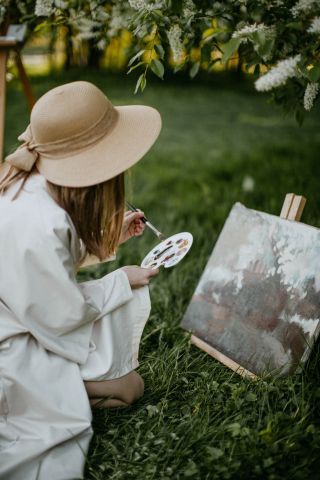
Supply: Valeria Ushakova/ Pexels
I not long ago saw an exhibition of Ga O’Keeffe’s function at the Museum of Modern-day Art (MOMA) in New York Metropolis To See Will take Time has elevated my knowledge of the innovative procedure.
It also resonates with my interest in mindfulness and compassion. Also, and unexpectedly, O’Keeffe’s knowledge and insights can enhance our interpersonal interactions.
Permit me elaborate. O’Keeffe was a learn of coloration and kind, and 1 of the greatest artists of the 20th century. In an early exhibition of her function in 1944, she wrote about how very simple items, like a flower or a sunset, are neglected in our occupied life.
She pushed us to pay back focus, composing:
I’ll paint what I see—what the flower is to me but I’ll paint it huge and they will be amazed into having time to search at it.
I never know if O’Keeffe was intrigued in Jap philosophy, but artist Arthur Dow, O’Keeffe’s teacher in faculty, was extremely affected by Zen philosophy. I believe of the ancient Zen Grasp Hui-Neng’s training (638-713), “The that means of lifestyle is to see.”
The Art of Meditation
Jon Kabat-Zinn, the creator of Mindfulness-Dependent Anxiety Reduction (MBSR), has helped hundreds of individuals across the world lower worry, anxiousness, and melancholy, and dwell happier and much more peaceful lives.
I have been educating MBSR for numerous several years. Allow me share an adaptation of one particular of the meditations that O’Keeffe would have appreciated. With any luck ,, you will appreciate it as properly.
The follow is small but profound. Set apart 3 to 5 minutes where by you will not be interrupted. Set a timer if you like.
Take Time To See
- Discover a little something you want to glimpse at. It can be anything—a flower, a leaf, a blade of grass, a stone.
- Decide on one thing that is still.
- Commence by obtaining relaxed, both sitting, standing, or lying down.
- Start off on the lookout at the object you have preferred.
- Your intellect might wander, and you could get bored or restless. It is Alright. Keep searching.
- Notice the color, light-weight, texture, and composition of your item.
- See with tender and loving eyes as you appear.
- Choose the time to genuinely see. Use what Jon Kabat-Zinn calls your “exquisite intelligence.”
- Have entertaining with this. Consider you are a bee locating this flower or a hummingbird.
- You may well be tempted to glance at other issues. Do not. Continue to be with your object.
- Permit you get still and turn out to be quiet as you notice.
- When the time is up, you may want to thank your flower, leaf, or stone.
When I 1st tried out this meditation exercise, I appeared at a petunia for 15 minutes. At some times, it felt like an eternity. But as I slowed down, I recognized the intricacy of the flower.
I understood that I experienced in no way seen a petunia, just merely glanced at them. It was extraordinary when I definitely stayed with it—beautiful and profound. And it was component of every day lifestyle. I experienced hardly ever taken the time to see it.
Jot down what arrived up for you.
- What did you detect?
- What did you really feel?
- What were being you considering?
- Did your perception of time adjust?
- Did anything at all change for you?
I have uncovered that children and teens normally get pleasure from this observe. You may well want to shorten it if it appears to be extra person-helpful.
When I reread the comprehensive quotation from the exhibition, I realized that O’Keefe was not just talking about seeking at a flower. She involved human interactions as very well: “To see will take time, like to have a mate normally takes time.”
I see deep compassion in this quote, as well as effective generosity. O’Keeffe is telling us that we do not require to hurry matters and that we can see bit by bit and completely.
When I do this meditation, I come to be mindful of light, the climate, appears, winds, and smells. What would it be like to bring this apply to relationships? To create the endurance to cling in there with interpersonal associations, with all kinds of climate and thoughts? To see what somebody is heading as a result of?
O’Keeffe is inquiring us to appreciate all that lifetime has to supply, from noticing a flower or a sunset to the complexities of a friendship or an intimate connection, and to give all the things our full consideration.
[ad_2]
Resource connection