
On the Deal with of It: Pareidolia
[ad_1]

A mountain rock in the condition of a human deal with. Atlas Mountains, Morocco. Very similar to Nathaniel Hawthorne’s small story, “The Excellent Stone Face.”
Resource: Gusman/Bridgeman Pictures, applied with authorization
“A single afternoon, when the sunlight was heading down, a mother and her tiny boy Ernest sat at the doorway of their cottage, chatting about the Good Stone Facial area…a work of Nature in her mood of majestic playfulness fashioned on the perpendicular aspect of a mountain…exactly to resemble the options of the human countenance” (Hawthorne, 1850).
“If an old prophecy must arrive to pass,” stated the mother, “we may possibly see a person some time or other, with just these a deal with as that.” The mother’s story “was generally” in the boy’s brain, and he, in deep contemplation, would gaze meditatively at the determine in the rock throughout his lifetime as he grew into an old person of “untaught knowledge.” Inevitably, the townsfolk realize Ernest as the person of the prophecy.
Hawthorne’s short tale, with its religious overtones, indicates the return of a Messiah, but for our functions, it demonstrates pareidolia—a perception of recognizable designs or visuals from random exterior stimuli (Oxford English Dictionary.) It is a visual illusion, generally of a face, that arises from ambiguous kinds these kinds of as rocks on a mountainside (Kurumada et al 2021). Essentially, human attributes appear within just inanimate objects, i.e., anthropomorphizing them.
Other cases consist of seeing the image of the Guy on the Moon, the determine of Jesus in a piece of toast (Liu et al, 2014) or a experience in cloud formations, and the vegetables, publications, and house paraphernalia of a portray by 16th-century Italian artist Arcimboldo (Karasu, 2018).
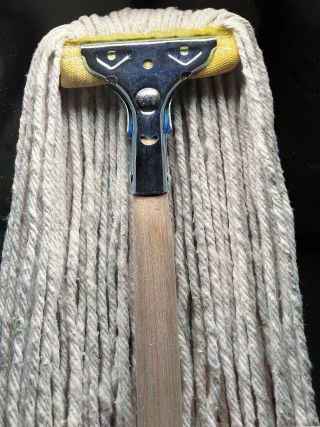
A kitchen area mop whose sample elicits a encounter with lengthy hair. A single example from the numerous provided by Robert and Robert.
Supply: From Robert and Robert, “Faces” (2000). Image taken by Sylvia R. Karasu, M.D., used with authorization
Some of the ideal illustrations are uncovered in Faces (2000), a book by Robert and Robert: by way of their placing photographs, the authors demonstrate how day-to-day objects, this kind of as a kitchen area mop or an electrical outlet, normally elicit pareidolia.
When we perceive these faces, we locate them “tough to ignore even although we know they are not actual” (Kato and Mugitani, 2015).
A apparent preference for face-like stimuli around scrambled or upside-down configurations, even as a “coarse encounter schema (e.g. two eyes and a mouth),” emerges early, which includes remarkably in the 3rd trimester of pregnancy as analyzed by 4D ultrasound know-how (Reid et al, 2017).
Experimentally, researchers have discovered evidence of pareidolia in infants as young as 10 months (Kato and Mugitani) and in rhesus monkeys (Taubert et al, 2017), suggesting that misperceiving a face in just an object is a “universal element of the primate face detection process” (Alais et al, 2021).
.jpg?itok=9qbtBFtm "Source: Betty Rose Nagle, Ph.D., retired professor of Classical Studies, Indiana University, Bloomington, used with permission")
With its eye and mouth configuration, this inanimate tree trunk presents the effect of a facial area, an case in point of pareidolia, a visual illusion.
Resource: Betty Rose Nagle, Ph.D., retired professor of Classical Reports, Indiana University, Bloomington, applied with authorization
The human brain is “specialized for facial area processing (Wardle et al, 2020 Taubert et al). We are primed to detect faces, potentially simply because expressions are vital for human interaction (Kato and Mugitani Alais et al). We can extract substantial social info, this sort of as gender, age, attractiveness, mood, and even trustworthiness from faces (Karasu). “Faces capture our attention immediately” (Alais et al).
Even further, our potential to detect faces, even when there is “ambiguous” visual facts, is “most likely remarkably adaptive” given the significance of faces all over existence “and the substantial price resulting from failure to detect a correct face” (Liu et al).
A community in our mind that consists of the suitable fusiform facial area space, the principal visible cortex, and the prefrontal cortex, is involved in genuine confront detection, as properly as the illusory experience perception characteristic of pareidolia (Liu et al). fMRI reports recommend that both equally demand intricate “conversation in between prime-down and bottom-up mind regions” (Akdeniz et al, 2018).
More, however illusory faces are originally represented in the brain similarly to human faces, inside of a handful of milliseconds, “the illustration transforms, and they come to be equal to everyday objects … consistent with a rapid resolution of the detection error” (Wardle et al, 2020).
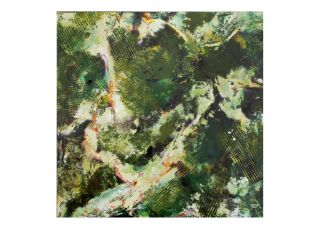
“Pareidolia,” 2014, an oil/collage from artist Lee Heinen. If you search carefully, you will come across several visuals of faces (i.e., examples of pareidolia), all through this photo.
Supply: Copyright Lee Heinen. All rights reserved 2023/Bridgeman Photos, made use of with authorization
Pareidolia, from the Greek para (along with) and eidolon (variety, form, or apparition), was initial named by Kahlbaum, a 19th-century German physician, who explained the thought as “fake perceptions … illusions or delusions of judgment” (Sibbald, 1867).
Descriptions of pareidolia day farther back again and are uncovered in Leonardo da Vinci’s 16th-century A Treatise on Portray. Writes da Vinci, “…by throwing a sponge impregnated with several shades against a wall, it leaves some spots on it…a wide variety of compositions may perhaps be seen in such spots, in accordance to the disposition of the brain…these types of as heads of males, several animals, battles, rocky scenes, seas, clouds, woods, and the like…”

“Allegory of Winter season,” 1563, by Italian artist Giuseppe Arcimboldo. Kunsthistorisches Museum, Vienna. Element of Arcimboldo’s series on the seasons.
Resource: Wikimedia Commons/General public Domain
Some believe that pareidolia is a “marker for notion era and a predictor of creativity” mainly because it demonstrates a “far more flexible” integration of ambiguous stimuli (Bellemare et al, 2022), not compared with creative responses to a Rorschach exam.
There is also the recommendation that the illusory faces of pareidolia elicit a “perceived age, gender, and psychological expression,” and at minimum in a person analyze, a “sturdy” cognitive bias (4:1) to understand and interpret them as male (Wardle et al, 2022).
While observing these illusory faces in inanimate objects is absolutely standard and typical, there are references to pareidolia observed in neurodegenerative situations, this kind of as Parkinson’s sickness, Alzheimer’s disorder, and Lewy entire body dementia.
Just one examine, for example, found that sufferers with Parkinson’s ailment, even without having the visible hallucinations widespread in these people, typically professional pareidolia related to nervousness (Kurumada et al).
And these with Parkinson’s illness, even devoid of dementia that can take place with the disorder, experience pareidolia additional frequently than nutritious controls (Uchiyama et al, 2015 Göbel et al, 2021). Positron emission tomography (PET) scans in this affected person populace also observed that the quantity of pareidolic illusions correlated with hypometabolism in the bilateral temporal, parietal, and occipital areas of the mind (Uchiyama et al, 2015).

An case in point of an illusory deal with, i.e., pareidolia, is witnessed in old Chinese steel cookware.
Supply: RaymondAsiaPhotography/Alamy Stock, applied with permission
More, patients with Lewy human body dementia, a situation that prospects to “a person of the most prevalent brings about” of visible hallucinations in the elderly, experienced additional pareidolic illusions in contrast to patients with Alzheimer’s condition or healthier controls and could be a scientific marker differentiating Alzheimer’s from Lewy system dementia (Uchiyama et al, 2012).
And while pareidolias in neurocognitive conditions “do not reflect visible hallucinations by themselves,” they might mirror a “susceptibility” or “predisposition” to them (Uchiyama et al, 2012).
[ad_2]
Supply connection